No Results Found
The page you requested could not be found. Try refining your search, or use the navigation above to locate the post.

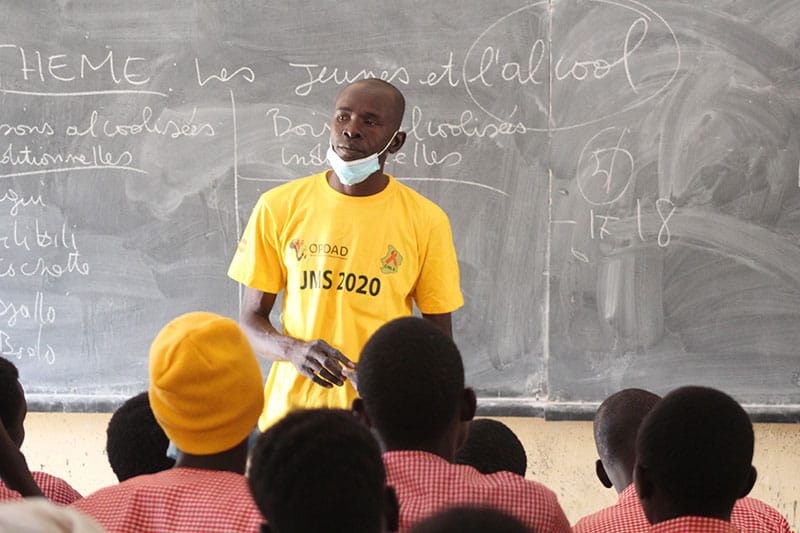
The harmful impact of alcohol and other drug use on sustainable development can be seen in many African countries, where public welfare and health systems are weak. Beer, wine and spirits are conquering local markets with the help of aggressive advertising by the alcohol industry. Legal protection measures are largely not implemented, although young people are particularly vulnerable to alcohol and other drug consumption. In an environment of poverty and unemployment, often coupled with family problems, social pressure and a lack of awareness of the consequences of alcohol and other drug consumption, many youths are prone to be harmed by alcohol and other drugs.
In response to the need for effective protection of young people being harmed by alcohol and other drugs, IBC and its local partner and member organisations implement the “Life Skills and Peer Education” programme. The holistic prevention programme targets disadvantaged youth and helps them to develop a healthy life perspective. By preventing youth from being harmed by alcohol and drugs, the programme decreases violence and diseases such as HIV/ AIDS in communities and enables the youths to lead fulfilled lives.
The Life Skills approach, which shapes the educational work within the programme, is based on promoting positive behaviour change in the long term. Programme participants are trained over a period of one year through regular life skills sessions to understand the links between addiction, HIV, discrimination and (gender-based) violence, and to question their own behaviour. Through active “self-learning” and under the guidance of trained life skills facilitators, the youth acquire everyday life skills that protect them from addiction, disease, violence and peer pressure.
The programme targets youths in and out of schools, such as street children, young workers and teenage mothers but also their parents and community members. The Life Skills programme was launched in Chad in 2010 and was followed by the Republic of Congo in 2013. Based on the experience gained in these countries, the programme’s activities were extended and adapted to Togo in 2018 and Tanzania in 2020.
In the weekly Life Skills trainings, qualified trainers of the Blue Cross help participants to develop self-esteem, self-awareness and decision-making skills. In the training sessions young people acquire better communication skills and learn to resolve conflicts peacefully. The Life Skills sessions empower the youths emotionally, socially and economically by capacitating them to solve problems and deal with difficulties in their lives. Saying “no” to alcohol and drugs is an important part of that.
Furthermore, programme activities focus on HIV/AIDS infections as a possible consequence of alcohol and drug consumption and motivate students to reflect on gender equality in an environment where patriarchal norms are prevalent and violence against women and girls is widely accepted. The training is based on active ‘self-learning’ to enable personal development. Each participant enrols for one school year in the Life Skills programme, attending the sessions on a weekly basis.
Workshops are also held with parents and teachers to reduce the risk of substance use and increase awareness about the related issues. They learn how to best protect young people from harm caused by substance use, and how to bring about sustainable behaviour change. For example, parents and teachers are shown non-violent parenting methods that focuses on dialogue with children (positive discipline).
Finally, the projects have put in place referral mechanisms for victims of violence or substance abuse, who offer professional medical, psychological and legal care in case of need. Girls Support group for survivors of gender-based violence help young girls talk about their experiences and break the culture of silence that exists around these topics in many countries. In addition, IBC actively engages men and boys in the journey towards gender equality.
Selected participants have the possibility to be trained as Peer Educators, who pass on what they have learnt in the Life Skills sessions to other youth – their peers. Peer Education is based on role modelling and the ability of young people to become leaders and agents of change through empowerment and support. By leading regular meetings and activities with other young people, Peer Educators act as multipliers nurturing the development of social and interpersonal competencies. This way, sustainable healthy behavioural patterns are being formed within communities of young people.
In parallel, the Blue Cross coordinates closely with local authorities, religious leaders and the media. IBC involves parents and community leaders in order to limit young people’s access to alcohol and other drugs and to reduce the risk of substance abuse. Awareness campaigns about the dangers associated with alcohol and drug use at recreational facilities, churches and within the community are being carried out regularly.
Students of secondary schools, motor taxi drivers and youth outside the school context between 12 – 25 years.
In addition, the programme works with local leaders, teachers and parents.
The programme is supported by the Swiss Agency for Development and Cooperation SDC, Federal Department for Foreign Affairs FDFA, Bread for All, implementing partners, national IBC member organisations, private funds.
1,2 Mio CHF for the actual programme phase
La Croix Bleue du Togo
Blue Cross Society of Tanzania
CTPAD – generation 5s
Atchon, Blue Cross Togo, Lomé, 2020
The page you requested could not be found. Try refining your search, or use the navigation above to locate the post.

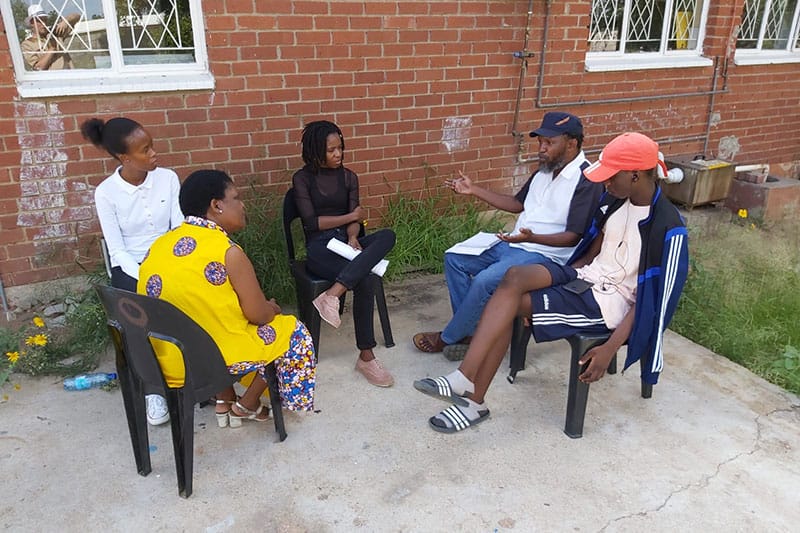
In recent years, per capita alcohol consumption in Africa has increased at a distressing rate. This has devastating effects on social coexistence and people’s health. There is a lack of preventive measures in the countries and there is an absence of therapeutic options for problematic consumer or even addictive behaviour. People with addiction find themselves on the fringes of society. They often live apart from their families, have lost their circle of friends and hardly receive any medical or psychological support. Especially in developing countries, where people with addiction can barely expect structural help, participation in meetings of self-help groups is often the only way to find a way out of addiction. Studies on the self-help concept showed that without additional therapeutic measures, the living situation stabilized significantly in 20-25% of the participants.
IBC is committed to seeing self-help groups as fundamental to the treatment of addictive diseases. That is why the establishment of self-help groups has become an important part of our activities in Africa. We understand the self-help concept as one of the simplest and most effective instruments in supporting people to leave their addictive behaviour behind. Self-help should not be a substitute for therapy, but it is an important accompanying measure, and in many cases the only measure available in addiction treatment.
IBC has developed a concept for planning and implementing self-help activities. It is based on the self-help instrument of the WHO (Quality Rights self-help recovery tool), which the WHO recommends for the therapy of mental problems and addictions as part of its universal health care goal (UHC). This self-help strategy (individual as well as group-based) is based on several different exercises that serve for self-reflection and aid those affected by addiction to achieve a better self-image and establish a way to recovery.
The self-help programme is based on the 12-Step Compass [dt. 12-step programme]. This programme consists of principles that show those affected how to face the problems resulting from their addiction, how to get better in the face of these problems and how to continue their lives when fully recovered. In addition, space is created in the groups to pray and meditate. Each group consists of at least five participants.
The IBC concept developed from this is adapted for use within the African Blue Cross member organizations. They are trained and then supported in establishing self-help groups. Groups are currently active in Nigeria, Botswana, Ghana, Burkina Faso, Uganda, Kenya, Madgascar and the Republic of Chad.
First, the IBC member organisations identify coordinators to take part in the self-help training. These online trainings are carried out by IBC employees on a monthly basis. Depending on the level of knowledge and needs of the participants, additional individual coaching is offered. After the coordinators have successfully completed the training, they start to set up self-help groups or work with existing groups. Each group operates autonomously. The meetings are structured in such a way that all participants can have their say and share their problems and experiences, without being “forced to speak”. Mutual respect, appreciation and confidentiality are guiding principles in structuring group conversations. The goal for each individual affected is an abstinence lifestyle. Self-help groups are being set up in those countries where people are most affected by addictive diseases.
In addition to holding self-help meetings, the local population is educated about the need for inclusion and care for addicts. To this end, the IBC member organisations work together with social multipliers such as police officers, doctors, communal and religious leaders. They are made aware of alcohol and drug addiction as a disease and learn that stigmatisation and marginalisation of addicts is not effective. These actors then get involved in their reference groups to support people with addictions and increase their participation in self-help groups. In their social and professional environment, they are committed to promoting inclusion and social support whilst also creating a better social climate.
Regular participation in meetings of self-help groups should be made possible in the relevant programme countries for all those who suffer from addictive diseases. The groups consist of four to a maximum of twenty participants. They are guided by trained volunteers and / or former addicts and carried out on an informal and charitable basis.
Your content goes here. Edit or remove this text inline or in the module Content settings. You can also style every aspect of this content in the module Design settings and even apply custom CSS to this text in the module Advanced settings.
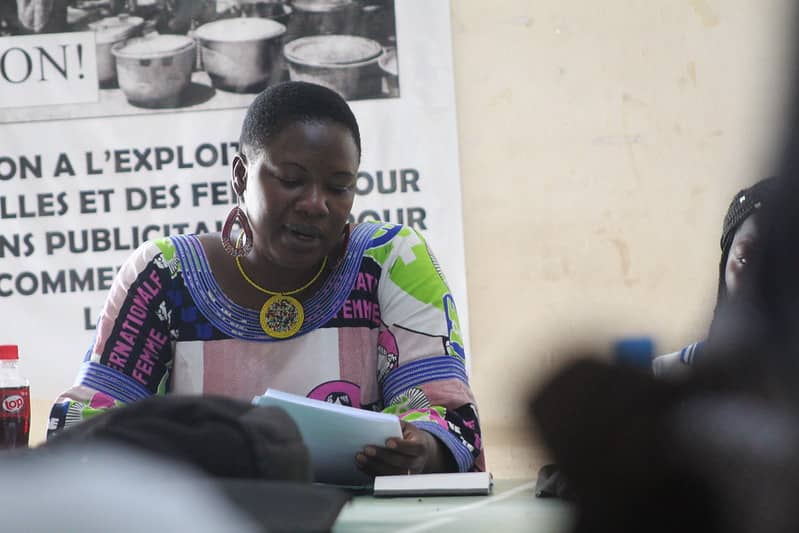
A healthy lifestyle does not only depend on individual behaviour. Policies and societal structures must support safe and healthy communities. Inadequate alcohol policies constitute a main reason for increased alcohol harm among vulnerable communities. IBC, therefore, trains Blue Cross organisations mainly in Africa to enable them to conduct effective alcohol policy advocacy.
The training includes targeted coaching on evidence-based community responses to alcohol problems and training on the use of different forums and media in advocacy. In addition, IBC provides monitoring and tailor-made local guidance on advocacy implementation. The main targets are to restrict access to retailed alcoholic beverages and implement comprehensive alcohol advertising, promotion and sponsorship bans.
IBC employs two experts in African alcohol policy advocacy to achieve its goals.
IBC also works directly with vulnerable communities and municipalities to teach them how to advocate more effectively for better legal frameworks and how to improve the quality of life in their communities. The resulting engagement also helps to raise public awareness of addiction and treat people suffering from addiction with more understanding and less judgement.
The World Health Organization confirms that when governments implement evidence-based alcohol policies effectively, alcohol-related morbidity and mortality rates decrease, resulting in a healthier society.

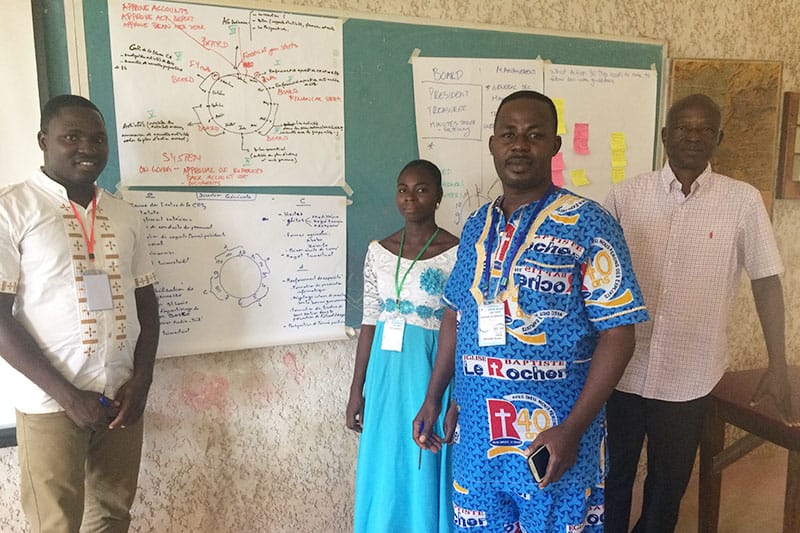
As a professional actor in the field of international development cooperation, IBC places the utmost importance on the sustainability of its programmes. IBC achieves a long-lasting impact by equipping people to help themselves and simultaneously influencing decision-makers, pressing for effective policies to protect people. A well-governed organization with clear policies and procedures is a prerequisite for successful collaboration with the people we would like to support.
International Blue Cross has recognized this need for strong civil society and is rolling out an ongoing skills and knowledge transfer programme to its member organisations. Well-structured and -governed organisations are the foundation for high-quality service delivery to beneficiaries. Furthermore, they help to secure basic human rights and the rule of law. Good Governance practices ensure that an organisation’s work contributes to its mission and purpose and that its resources are used wisely and effectively. It can also provide the organisation with more opportunities for growth.
An OECD Study states that, in order to successfully engage civil society, it is useful to use a mix of methods to support CSOs’ accountability in partner countries, recognising this as essential to strengthening civil society and enabling environments. IBC has also recognized this internally by analysing members’ annual reporting and organizational activities.
The main objective of the IBC Skills- and Knowledge Transfer Programme is to equip member organisations with a solid knowledge on good governance and promote a culture of learning and innovation among the member organisations.
The Skills and Knowledge Transfer Programme is delivered by IBC staff through participatory online trainings to all interested Blue Cross members in French and English on a monthly basis. IBC trains its member organizations in a variety of topics:
“Through the training sessions I have learned, that it is one thing to have regulations, standards and all sprts ofdocuments at hand. Storing them in a book shelve yet does little good. What is really important is, that we are we practicing and implementing good governance principles – and this training helps us to do it right”
Ms. Panga, Blue Cross Society Tanzania


